
Showing posts with label bokeh. Show all posts
Showing posts with label bokeh. Show all posts
Thursday, September 2, 2010
Le Boudoir - Still techniques in film making
Lily DesLys - Le Boudoir from Treyban on Vimeo.
No, the video isn't a cheap ploy to entertain you while I'm fitting a new toilet and sink. It's a nicely made video, but I'd like to draw your attention to the sequences that are blurred, like the opening shot where the dancers legs are in focus but the background is blurred.There are also a few handheld sequences where blur is introduced.
This is a very difficult effect to achieve using a video camera , so i'm guessing here, but I think this film has been made using Canon 5D Mark 2, which is a still camera with a video function. By using wide aperture prime lenses the film maker has added bokeh in a movie. By professional movie standards, a Canon 5D Mark 2 is cheap, so I expect to see tasteful blurs popping up all over the place, until it's done to death.
I also noticed that the film maker has created a vignette by shading the corners of the frame. This technique is usually used to draw your attention to the action, but seems redundant given the subject of the movie.

Thursday, July 8, 2010
Nikon 50mm f/1.2 - The Lens with a Voice
 Nikon 50mm f/1.2 lens
Cameras come and go and digital cameras go very quickly indeed, but a lens with attractive characteristics will always be valuable.
Usually my pictures take shape over several weeks and progress from ideas to sketches. I'm usually striving for a certain look before I take a picture and to help me I have several cameras and lenses, plus a choice of film to call upon to get what I'm after.
My equipment is varied and includes homemade contraptions that sometimes fail spectacularly. I'm a fan of toy cameras with plastic lenses to distort reality and I love instant cameras. To feed all these cameras I have a freezer stocked with a variety of film, most of it no longer made. I also own more traditional cameras and lenses that will lend a certain voice to the picture.
The small lens above might look ordinary enough, in fact it looks empty when you look through it (an optical illusion), but, when handled correctly - which is not always easy, it produces images of spectacular quality with certain characteristics that are unique. This lens sings from a different hymn book.
The Nikon f/1.2 is called a "fast" lens which means a lens with a wide aperture that lets a lot of light through. Fast lenses are designed for photography in the dullest conditions, dusk or even candle light, without the use of flash. A by-product of a fast lens is shallow depth of field (depth of focus), when it's used at its largest apertures.
The shallow depth of focus and the blur it produces is my reason for using a fast lens. Used at the widest apertures the depth of focus of the Nikon f/1.2 is ridiculously shallow, making focusing hit and miss (this is a manual lens, not autofocus). The other side of the coin is that this lens is amazingly sharp, which allows me to float the sharp on the blur like a layer.
So focusing is tricky, there's no room for error and I always get a percentage of out of focus frames. Another feature (it's not a problem for me), is flare. There's a lot of glass in this lens (7 elements), for the light to bounce around. The lens is supplied with a lens hood that apparently does a great job of reducing flare, but I've never used mine.
 Flare and bokeh
This lens does have wonderful painterly characteristics when used with a camera loaded with suitable film. Look at the tree line where it meets the sky in the photograph above, isn't that wet on wet?
I've used this lens for many years, I know its voice which I sometimes hear when a picture comes to mind.
Thursday, June 24, 2010
Understanding Contrast in Photography
 Walking in poppies last weekend
The envelope containing my negatives and CD of images dropped on the mat this morning, as always I was excited to see what I'd produced but my excitement was short lived. I have to admit I took some rubbish photographs at the weekend. There are a couple of interesting shots, but nothing to move the world, this week (I'll have to move it next week).
Several of the photographs are out of focus, which is a combination of using a wide aperture for shallow depth of field and my poor eyesight, but most of them lack contrast in one form or another.
Pass me that soapbox mother, it's time for a rant!
Contrast is one of the least understood principles of photography, I suppose it has to be mis-understood because everyone thinks they know what contrast means. Artists and designers are taught (or should be), about contrast in college. But a lot of photographers assume contrast is a property of the lens or the printing paper.
Understanding contrast is knowing what to look for and how to make adjustments to your image to improve the composition. It's putting your finger on what works and it allows you to repeat your success and avoid failure.
Contrast is one of the five pillars of design (The others are repetition, alignment, tension and proximity, maybe I'll explain the other principles in the future), unless you understand the principles your photographs are little accidents and the result of chance. You can take stunning photographs by following the rules and you can take equally stunning photographs by breaking the rules, but before you can do either, you must know the rules.
So what is contrast?
Contrast is a simple way to add interest and make objects in the composition stand out! You create contrast when two elelments are different. But here's the catch, the difference must be big! Don't mince around, be bold.
Examples of contrast
Counterchange
Counterchange is very easy, it is placing dark against light and light against dark. There's nothing new about the technique, it's been used by artists for centuries, and all great photographers since Julia Margaret Cameron have used counterchange.
 Eugenio: counterchange
Colours
You can add contrast with colours, but a little goes a long way. I tend to look for contrasting temperatures, (think cool and hot) rather than colours on the oppostite side of the colour wheel.
Touches of hot and cold color
Space
The contrast between empty and full. If theres a lot going on in the picture, adding space will create a resting place for the eye and introduce contrast to a busy scene.
 Giving the little dog a little space.
Size
The opposite of contrast is "similar" or "same". If two objects are similar make one different.
 Similar objects - made to be different
Blur
Blur contrast against sharp, it's a powerful visual tool for the photographer. It's one of the unique elements of photography unavailable to other arts, think about it, you'll rarely see a blurred painting or sculpture.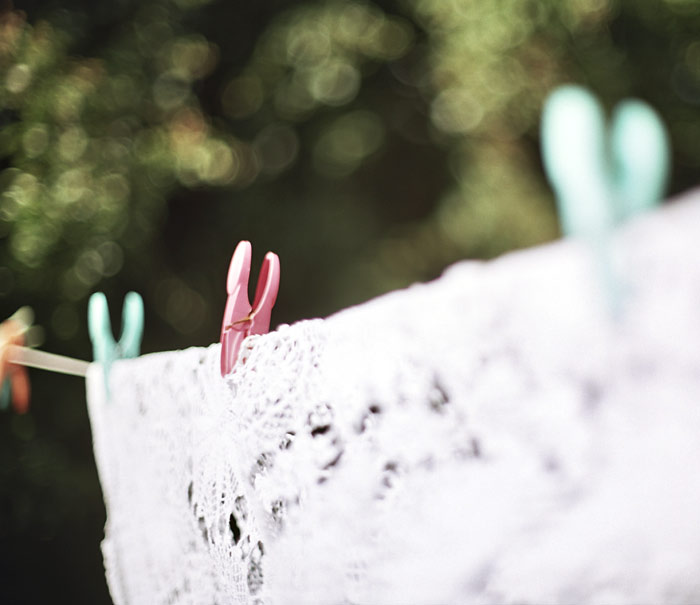
Sharpness and blur (bokeh in the background)
There is good blur and there is bad blur! The quality of blur is decribed as "Bokeh". To exploit bokeh and use it to create contrast you need to have a camera that lets you look through the lens (a single lens reflex or view camera). Small digital cameras are a waste of time when it comes to blur because they render almost everything sharp.
Here endeth my rant on contrast. Amen.
Subscribe to:
Posts (Atom)
LinkWithin
